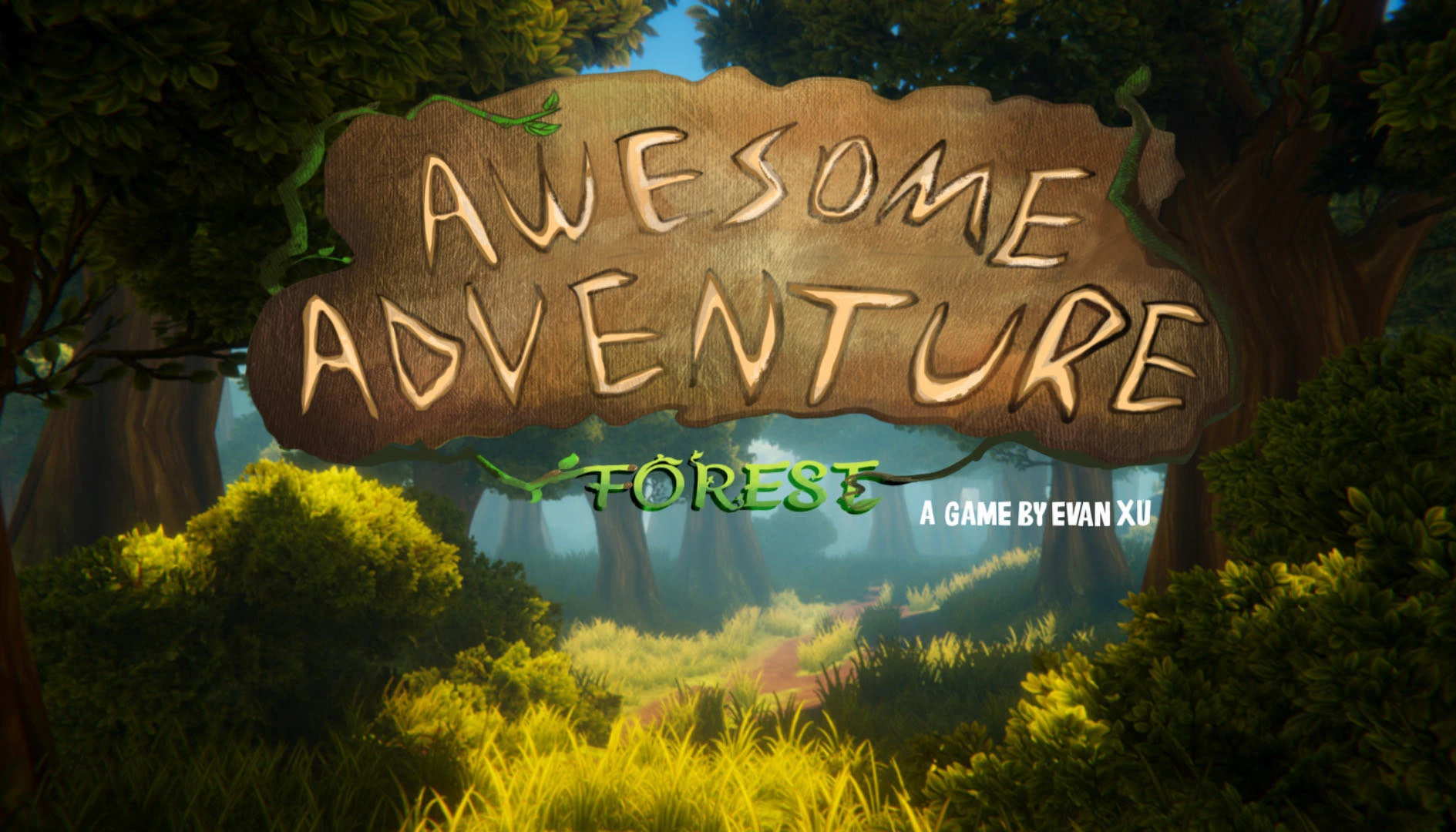
Awesome Adventure Forest
Board Game · Tabletop RPG · Physical Design

Awesome Adventure

Multiplayer RPG Board Game · Lead Designer & System Architect

A strategic multiplayer RPG tabletop game where players traverse a vast world map to uncover quests, manage resources, and engage in tactical combat — all governed by a unique dual-board system that separates exploration from combat.
Format
Physical Tabletop
Players
Multiplayer RPG
System
Dual-Board
Role
Solo Design
01

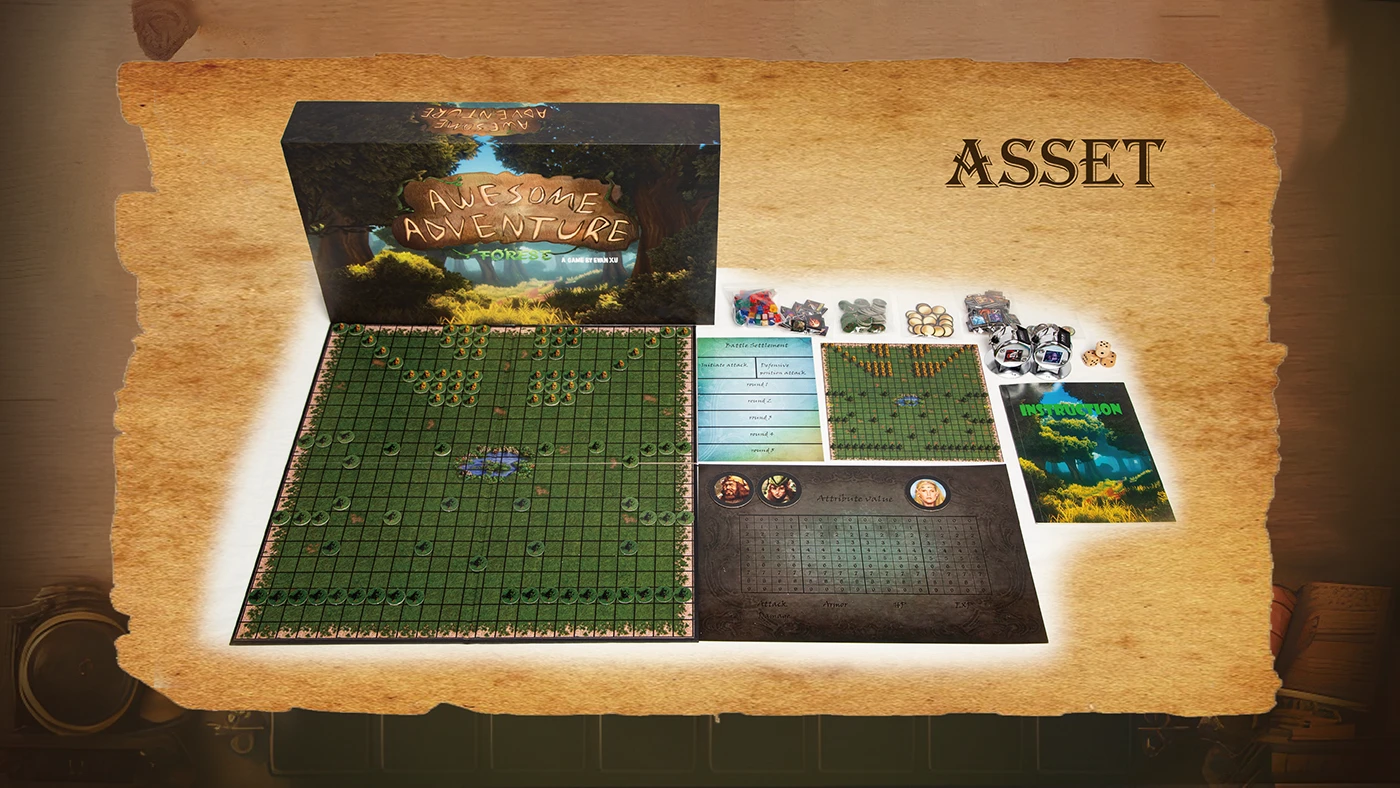
Game Components

02

Case Study

Project Context

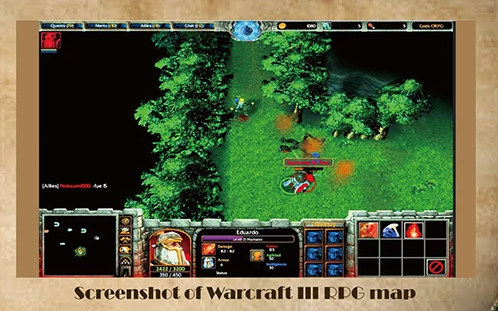
A strategic multiplayer RPG tabletop game where players traverse a vast world map to uncover quests, manage inventory, and engage in tactical combat. Inspired by classic RPGs like Warcraft III and Heroes of Might and Magic III.


Core Objective

To create an immersive adventure experience that balances free-form exploration with structured tactical combat — giving players both the freedom of an open world and the depth of a dedicated battle system.


Design Challenge

Managing the transition between macro-scale exploration (World Map) and micro-scale strategy (Combat Board) without breaking the game's narrative flow or overwhelming players with rule-switching.

Role & Responsibilities

Lead Game Designer & System Architect (Solo Project). Developed the core RPG framework including the quest branching system, character progression, and the dual-board combat mechanics. Designed all physical components including game boards, attribute sheets, tokens, and instruction manual.

Attribution Note

To focus on complex system design, visual assets (icons and map textures) were adapted from Warcraft III and Heroes of Might and Magic III. My primary contribution lies in the mechanics orchestration and information architecture — how all systems connect.

Warcraft III RPG reference
Design Inspiration · Warcraft III RPG Map
03

The Dual-Board System

🗺
World Map — Exploration Phase

The Global Map is the primary interface for exploration. Players move across tiles to trigger random encounters, collect story-driven quests, and manage inventory. Each move carries a potential narrative consequence — transforming a simple move-and-collect game into a dynamic adventure.

Features: Fog of War · Quest Triggers · Resource Nodes · NPC Encounters

Combat Board — Battle Phase

When a conflict triggers, the game shifts to a dedicated Combat Board. This secondary space allows for deeper tactical positioning and skill execution, completely separate from the exploration phase — avoiding visual clutter on the world map.

Features: Spatial Tactics · Flanking Bonuses · Skill Cards · Turn-Based Resolution

By separating combat onto its own board, spatial tactics like flanking and terrain bonuses become possible — things impossible to manage on a high-level exploration map.

04

Component Design

🗺
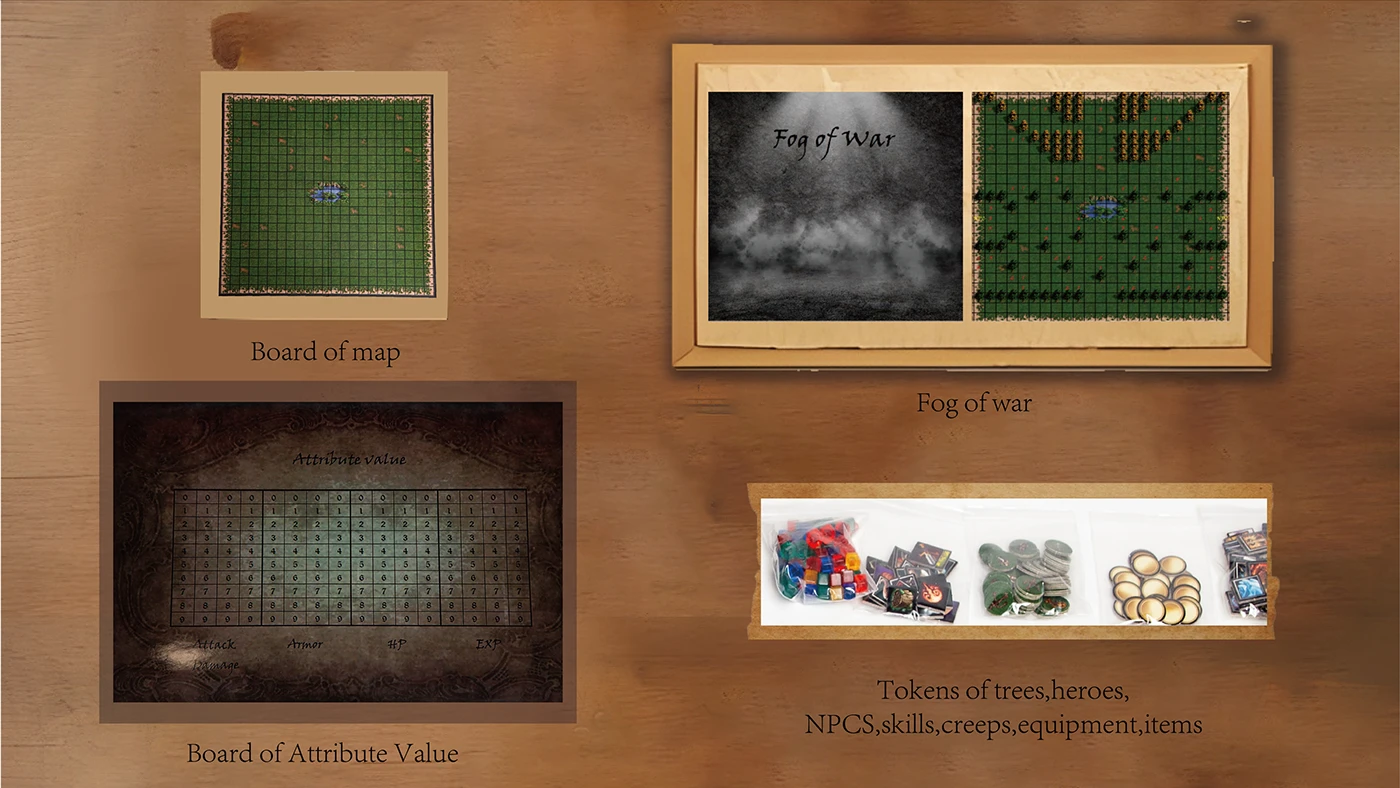
Board of Map

The world exploration grid. Players place tokens to traverse biomes, trigger quests, and reveal the Fog of War as they explore.

🌫
Fog of War

Dual-panel combat board revealing hidden terrain as battles unfold. Creates information asymmetry and strategic uncertainty.

📊
Attribute Value Board

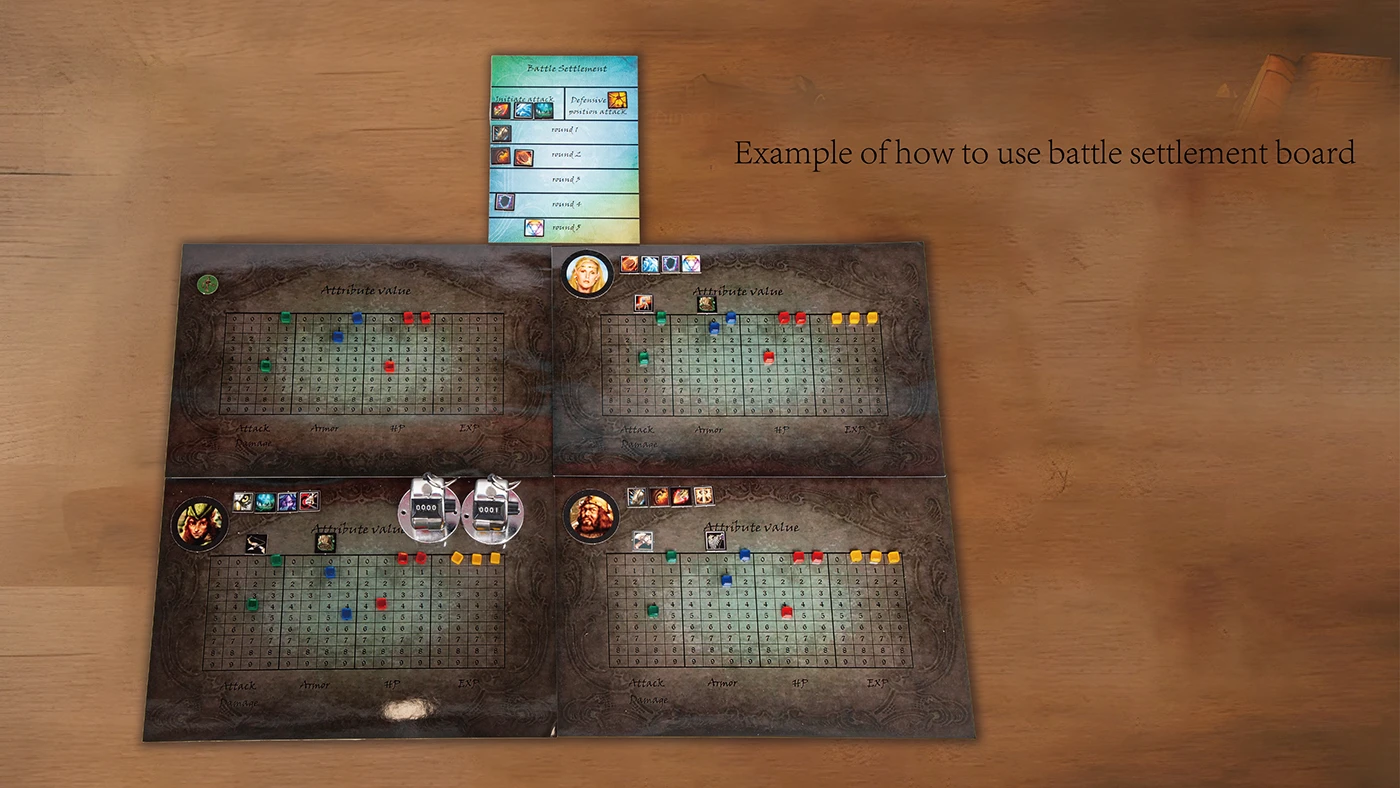
The "Stat-Matrix" — each player's personal tracking sheet for Attack, Armor, HP, and EXP. Tokens slide along axes to track progression dynamically.

📋
Battle Settlement Board

Records combat rounds with initiative-attack and defensive-position columns. Ensures transparent, auditable battle resolution across up to 5 rounds.

🎭
Hero Tokens & Portraits

Character identity tokens for heroes, NPCs, and creeps. Visual shorthand for allegiance and unit type on both boards.

🎲
Item & Skill Tokens

Physical tokens for equipment, skills, trees, and currency. Tangible inventory management that keeps the game state visible to all players.

05

Design Process

01
Multi-Layered World Architecture

Designed the Global Map as the primary exploration interface. Players move across tiles to trigger random encounters, collect story-driven quests, and manage their inventory. Every tile has the potential to shift the narrative — exploration is never just movement.

Board components
02
Combat Transition Design

When a conflict triggers, the game shifts to the dedicated Combat Board. I designed this secondary space to allow for deeper tactical positioning and skill execution, completely separate from the exploration phase. This keeps the world map uncluttered while giving combat the spatial richness it deserves.

Battle settlement board
03
Stat-Matrix Balancing

Created a "Stat-Matrix" to balance character leveling across Attack, Armor, HP, and EXP axes. Through iterative playtesting, I ensured that as the "Adventure" progresses, the "Combat" complexity scales accordingly — preventing early-game dominance and keeping late-game players engaged with meaningful power curves.

06

Key Design Decisions

Dual-Board System

Separating combat from the world map avoids visual clutter and unlocks spatial tactics (flanking, terrain bonuses) impossible to manage on a high-level exploration map. Two boards, two cognitive modes, one seamless game.

📖
Narrative-Driven Exploration

A quest-trigger system ensures every move on the map has a potential story consequence. This transforms a simple move-and-collect game into a dynamic narrative experience where player agency feels meaningful.

📈
Physical Stat Tracking

Instead of paper-and-pen bookkeeping, the Attribute Value Board uses sliding tokens on a grid matrix. Every player's stats are always visible to the table — reducing cognitive load and increasing social tension.

🌫
Fog of War Mechanic

The Fog of War panel creates information asymmetry in combat — players must decide whether to commit actions on imperfect information. A simple physical mechanic that generates enormous strategic depth.

07

Outcomes & Reflections

What Was Built

A high-fidelity RPG prototype with a complete set of physical components: Quest Cards, Hero Sheets, Attribute Matrix, Battle Settlement Board, and a full token set for trees, heroes, NPCs, skills, creeps, equipment, and items.

Key Learning

Managing a multiplayer RPG taught me how to streamline complex data (stats/items) into a user-friendly physical UI — information design isn't just for screens. Every physical component is a UI decision.

Designer's Note

This project fundamentally changed how I think about information architecture. A tabletop RPG is essentially a multi-user database with a physical interface — every component is a data structure, every rule is a function. Designing the Stat-Matrix taught me that the hardest design problem isn't creating complexity, it's making complexity legible. When four players can glance at a table and instantly understand the state of the entire game, that's good design.

More Projects

← Previous Game
Hook Fight
2-Player competitive web game · Physics-based combat · GameSalad
Design Portfolio →
Body-Worn Camera UI
UX/UI · Android · Public Safety · 3.2" Display