02
Screenshots
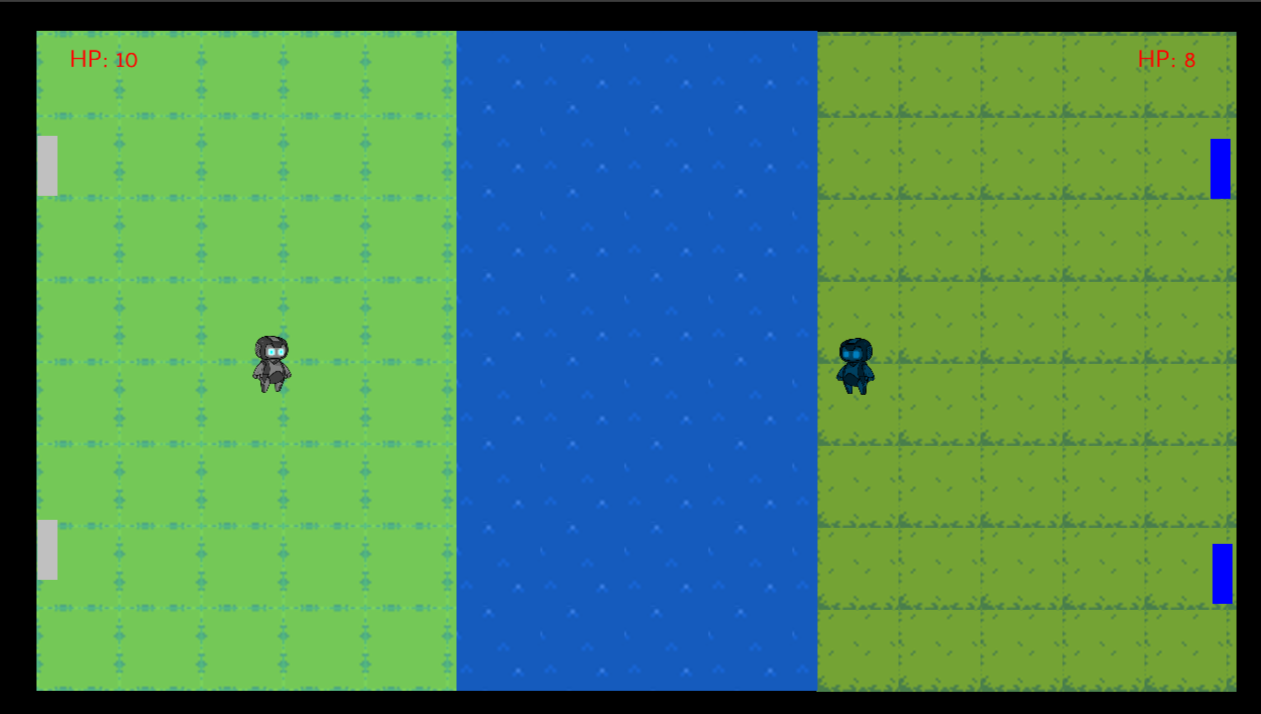
Core Gameplay · Split Arena · Two Robots
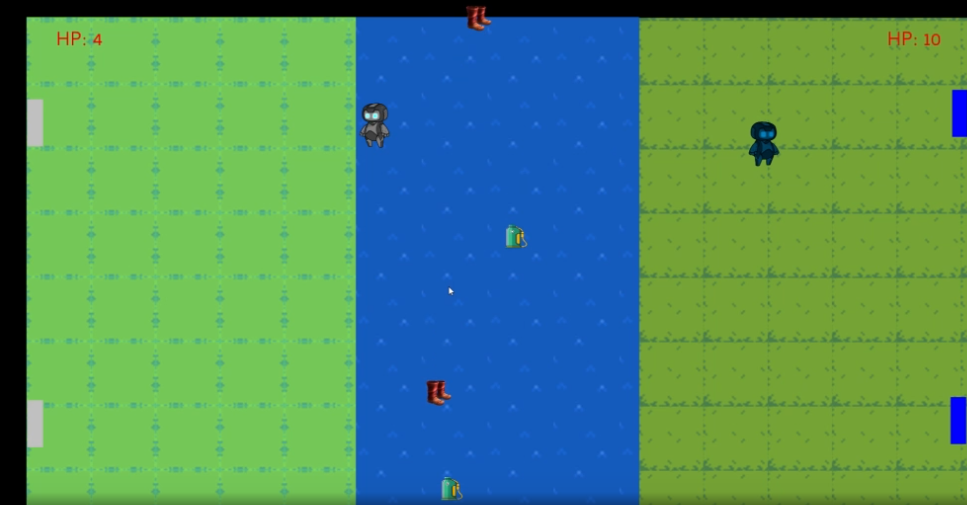
Neutral Zone · Power-ups Active
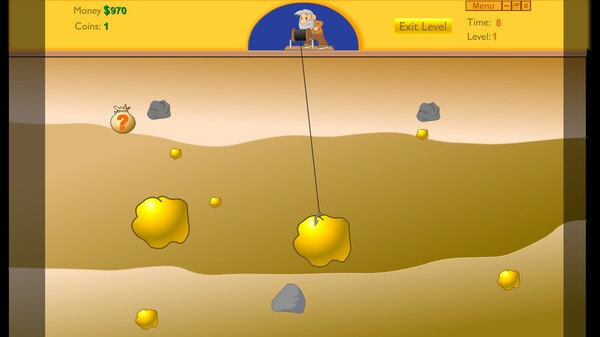
Design Inspiration · Gold Miner (Classic)
A browser-based competitive robot combat game built in GameSalad. The core innovation: the hook serves simultaneously as an offensive weapon and a resource-gathering tool — forcing players into rapid risk-vs-reward trade-offs every second.
A multiplayer competitive web game built in GameSalad, featuring physics-based robot combat. Inspired by the classic Gold Miner, I transformed a static collection game into a high-speed competitive combat experience.
To create a high-stakes competitive experience with immediate sensory feedback, centered around a minimalist "hook" mechanic with dual-purpose functionality.
Balancing the dual-purpose nature of the hook — simultaneously an offensive weapon and a resource-gathering tool — to force players into rapid strategic trade-offs between aggression and growth.
Solo Designer & Lead Developer. End-to-end execution including conceptualization, game mechanics design, numerical balancing, logic programming within GameSalad, and UI/UX visual design.
GameSalad · Physics Engine · Collision-Based Logic · Attribute Systems · Browser Deployment
Reimagining the classic Gold Miner: the core innovation lies in the hook's dual-functionality — it serves both as an offensive weapon to neutralize the opponent and as a strategic tool to harvest environmental resources.
Launch the hook across the neutral blue zone to strike the opponent's robot. A direct hit deals damage and forces the enemy back. The retraction window creates a "vulnerability period" — your hook is in flight, you're exposed.
The same hook can grab power-ups floating in the neutral zone — speed boosts, HP restores, bomb traps. Every time you send the hook, you choose: attack the enemy now, or risk pulling a buff instead. That trade-off is the entire game.
Unlike instantaneous projectiles, hooks create a tangible physical connection and temporal delay — the retraction window allows for counter-play and psychological mind games a simple shooting mechanic lacks.
Initially the game only featured the attack mechanic. Playtesting revealed the gameplay felt repetitive and lacked a "mid-game hook" to keep players engaged beyond the first few exchanges. Matches stagnated into defensive stand-offs.
I introduced randomized power-ups in the neutral zone: Movement Speed Boosts, Bomb Traps, HP Hearts, and Hook Velocity Upgrades. This environmental interaction layer successfully created a "risk-vs-reward" dynamic, significantly increasing tactical depth and unpredictability of each match. High-value items force players to leave defensive positions — a comeback mechanic built into the map.



Unlike instantaneous projectiles, hooks create a tangible physical connection and temporal delay. The retraction window creates a high-tension "vulnerability period," allowing for counter-play and psychological mind games that a simple shooting mechanic fundamentally lacks.
Buffs were implemented to break defensive stagnation. By placing high-value items in the neutral zone, I forced players to leave protected positions — ensuring dynamic game flow and giving disadvantaged players a path to victory through precision and timing, not just raw damage.
The three-zone layout (Player 1 territory · Neutral Zone · Player 2 territory) creates natural territorial tension. Entering the neutral zone is inherently risky — you're equidistant from both sides, hooks can reach you, yet the best rewards are always there.
Building for the browser with GameSalad meant no downloads, no installs. Two players, one computer, instant play. The constraint forced me to design controls and UI that could be learned in under 30 seconds while maintaining strategic depth.
A seamless browser-based competitive game with zero barrier to entry. Demonstrates a polished "core loop" with intuitive controls and escalating tension through the power-up system.
Gained deep understanding of attribute-based logic systems and mastered complex collision-based interactions within GameSalad's technical constraints — finding creative solutions where the engine pushes back.
Explore asynchronous networking for remote play and introduce environmental hazards (moving obstacles, destructible terrain) to further elevate strategic complexity.
This project taught me that constraint breeds creativity. GameSalad's limitations forced me to think differently — instead of complex scripting, I designed systems where the rules themselves create emergent behavior. The hook's dual-use isn't a feature I added; it's an emergent property of one simple mechanic interacting with an environment. That realization changed how I approach every design problem since.